


Accelerating AMR Action in Rwanda
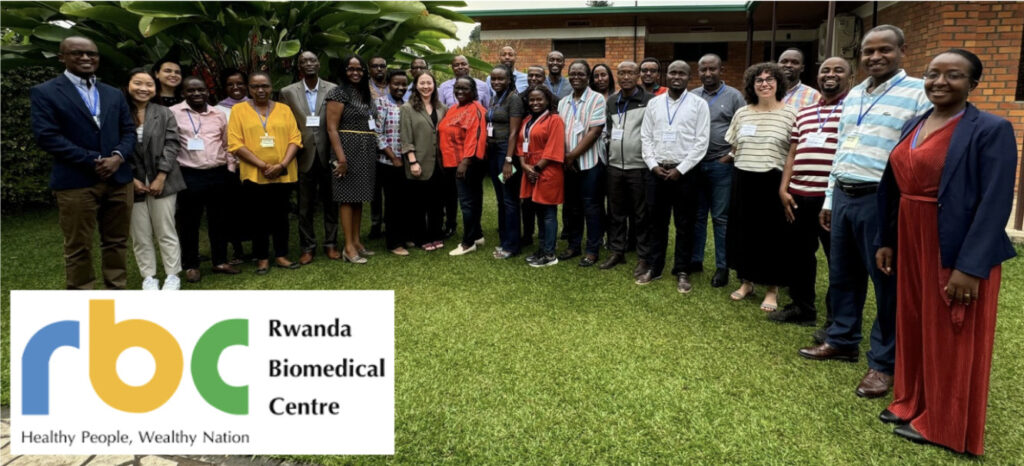
In 2024, the Rwanda Biomedical Centre (RBC) led a transformative update of the country’s National Action Plan (NAP) on Antimicrobial Resistance (AMR), charting a bold path to safeguarding the effectiveness of life-saving medicines for future generations in Rwanda.
The AMR Policy Accelerator partnered with RBC during this process. Together, they conducted a review of Rwanda’s first NAP, delivered the Smart Choice Process (SCP) to strategically prioritize future AMR interventions, and produced a policy brief outlining key recommendations to guide the implementation of NAP 2.0 and ensure its lasting impact.
These efforts contributed to the development of Rwanda’s updated, multisectoral NAP 2.0—a robust and actionable plan that aligns closely with the country’s long-term development vision as outlined in Rwanda’s Vision 2050.
Core Team Rwanda

Prof. Claude M. Muvunyi,
Director General, RBC

Dr. Isabelle Mukagatare,
Head of Department of Biomedical Services, RBC

Gashegu Misbah, Director One Health Unit, RBC
Rwanda’s NAP 2.0 on AMR (2025-2029): Priorities for Action
Co-produced by RBC and the AMR Policy Accelerator, this policy brief outlines the progress achieved under Rwanda’s NAP 1.0, highlights the strategic priorities emerging in NAP 2.0, and offers recommendations to support its implementation for sustained impact on AMR.
Key Takeaways
- Alignment with Rwanda Vision 2050: Planned NAP 2.0 efforts to effectively combat AMR reaffirm the Rwanda Vision 2050 commitment to strengthen its healthcare system, improve universal health coverage, and advance health infrastructures.
- Importance of multisectoral coordination: Combating AMR in Rwanda necessitates active communication, coordination and ownership across all ministers and departments beyond the health sector to prevent siloed responses.
- Enhanced evidence-informed strategic planning and accountability: NAP 2.0 has introduced a new governance objective, a detailed monitoring and evaluation framework, and a prioritization process for high impact interventions.
- Need for improved sensitization of materials related to AMR: Strengthening existing communication mechanisms for better dissemination will help increase public awareness and understanding of AMR and facilitate informed decision-making.
Smart Choice Process in Rwanda
Using the Smart Choice Process, RBC brought together experts from across human, animal and environmental health sectors to develop a robust and actionable NAP 2.0.
While leading the development of Rwanda’s NAP 2.0, the Rwanda Biomedical Centre (RBC) selected the AMR Policy Accelerator’s Smart Choice Process (SCP) to facilitate the identification, ranking and prioritization of AMR interventions for Rwanda’s National Action Plan 2.0 on Antimicrobial Resistance (2025-2029).
Over a 16-week period, RBC engaged key representatives from the human, animal, and environmental health sectors as SCP participants to ensure a transparent and multisectoral approach. SCP participants worked together through a series of qualitative and quantitative prioritization steps, designed to build consensus on the most impactful interventions across human, animal, and environmental health sectors. These processes culminated in a two-day facilitated workshop where stakeholders from Rwanda reviewed and finalized the priority interventions.
Contributors to Rwanda’s NAP 2.0
The development of NAP 2.0 was led by RBC in collaboration with key national stakeholders and technical institutions, including Rwanda Agriculture and Animal Resources Board (RAB), One Health Secretariat, University of Rwanda (UR), Rwanda Environment Management Authority (REMA), and Rwanda Food and Drugs Authority (Rwanda FDA). It benefited from the support of international partners including the World Health Organization (WHO), Food and Agriculture Organization (FAO), ReAct Africa, Partners In Health (PIH), Jhpiego, and the Clinton
Health Access Initiative (CHAI). The action plan reflects broad consensus achieved through multisectoral technical working groups involving representatives from government agencies, NGOs, academia, civil society, and development partners.
Smart Choice Process Team
People block – please see right sidebar for options.


