


The synthesis and translation of rigorous scientific evidence to inform AMR policy and practice is essential for effective global action to address AMR.
The 2024 Political Declaration on AMR adopted at the UN General Assembly has set in motion the establishment of a scientific panel on AMR, that will support evidence-informed policymaking on AMR. A carefully designed scientific panel on AMR could:
- synthesize research on AMR to offer evidence-informed policy recommendations,
- address governance gaps by improving global coordination and cooperation,
- provide real-time evidence to guide policies,
- track progress toward agreed global AMR goals and targets.
Perhaps most importantly, for nations with the highest burden of AMR, a well-designed scientific panel with a clear mandate could play a vital role in global AMR governance by providing evidence-informed recommendations to promote equitable AMR interventions.
Our Policy Research
Design options for an effective IPEA | Learnings from the IPCC
The AMR Policy Accelerator has focused on three areas of policy research related to the design of the IPEA.
- Structuring IPEA’s Scientific Work to Meet Policy Needs. Examines how key decisions in the IPEA founding documents will shape IPEA’s scientific outputs.
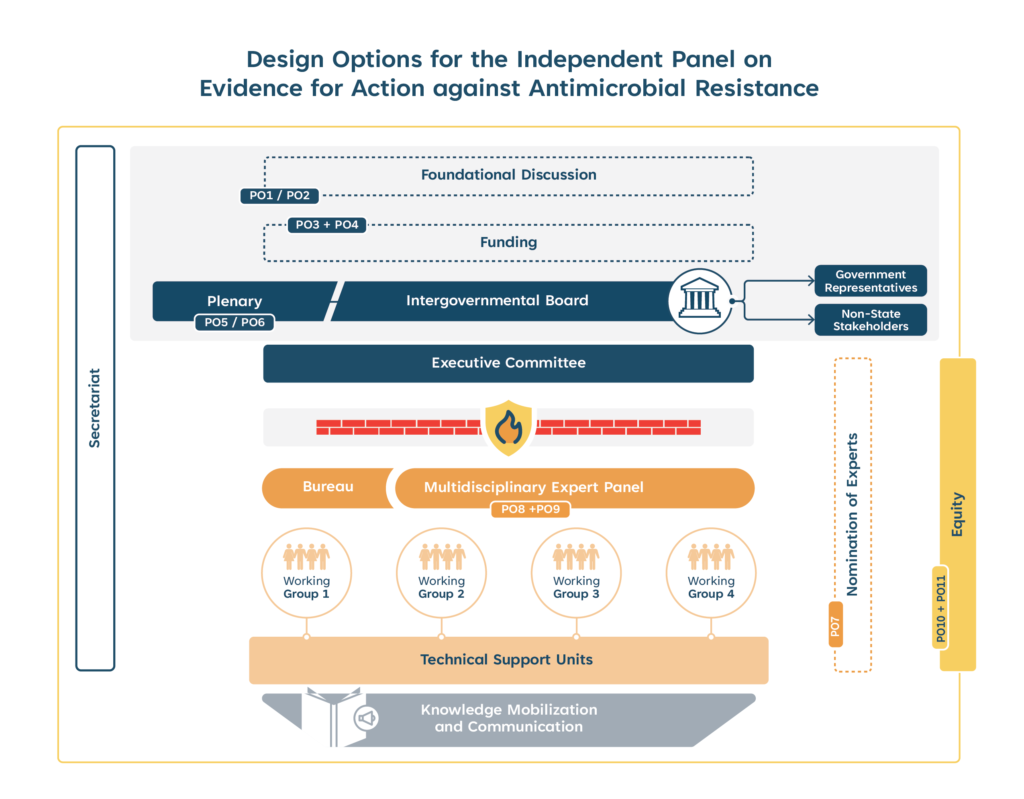
- Design options for an effective IPEA. The policy options and trade-offs decision makers will have to consider when designing the IPEA.
- Learnings from the IPCC. How the IPCC can inform the design of the IPEA, including the benefits of intergovernmental and non-intergovernmental approaches.
Structuring IPEA’s Scientific Work
This research, completed in coordination with, the European Society of Clinical Microbiology and Infectious Diseases (ESCMID), examines key decisions in the IPEA founding documents, reflects on how these decisions will shape IPEA’s scientific outputs and suggests an approach and timeline to structure IPEA’s scientific program of work. It also proposes topics for scientific assessments that IPEA could tackle in its first years of operation to maximize the relevance and credibility of its knowledge synthesis efforts and to ensure they respond to Members States’ policy needs.
Project outputs
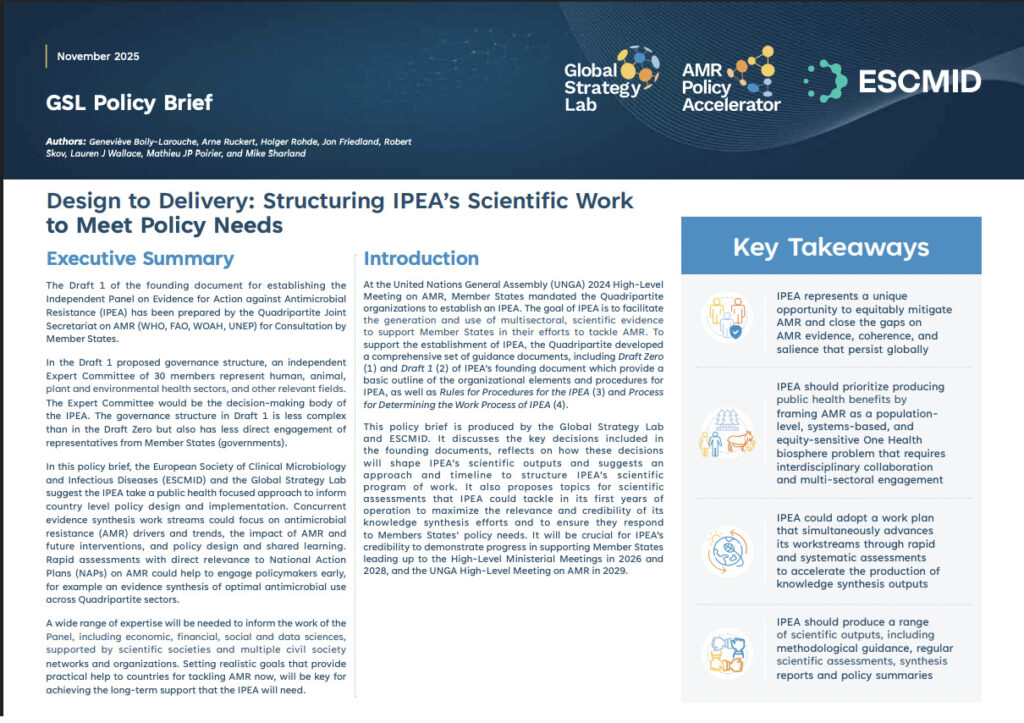
Download the Policy Brief Design to Delivery: Structuring IPEA’s Scientific Work to Meet Policy Needs

Watch the webinar:
Shaping Global AMR Policy: What Scientists Should Do About IPEA
Design Options for an Effective IPEA
Designing IPEA to be effective is a complex task that requires carefully navigating trade-offs between values such as inclusiveness and efficiency, scientific independence and political responsiveness, while balancing timely outputs with methodological rigor. These tensions and trade-offs are inherent in SPI design and must be managed deliberately through design choices. Our working paper, policy brief and explanatory video dive into these trade offs.
Project outputs
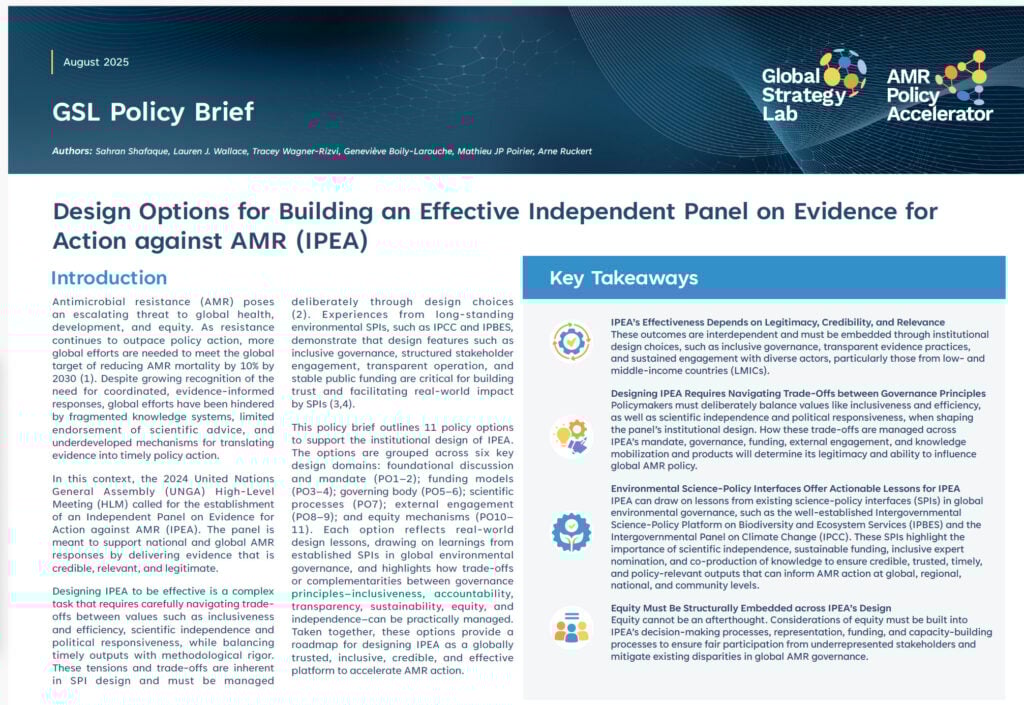
Download the Policy Brief: Design Options for Building an Effective Independent Panel on Evidence for Action against AMR (IPEA)
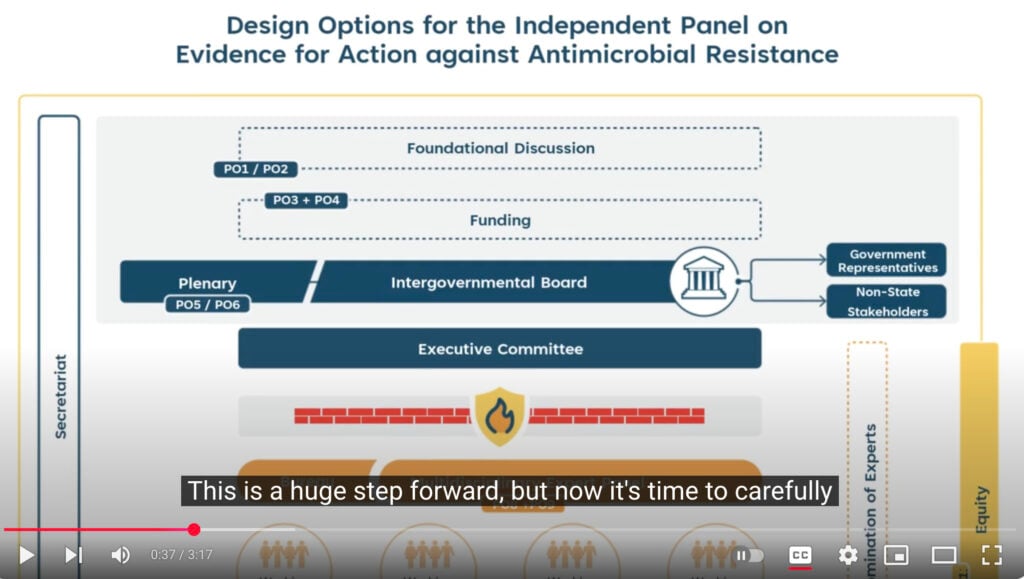
Watch the explainer video:
Design Options for an Effective IPEA
Learnings from the IPCC
Existing scientific panels, such as the Intergovernmental Panel on Climate Change (IPCC), provide policymakers with regular scientific assessments, explain implications and highlight potential future risks. At the AMR Policy Accelerator, we have distilled lessons, both successes and shortcomings, from the IPCC for consideration when designing an effective scientific panel and examined the relative merits of two options: an intergovernmental approach, and a non-intergovernmental approach.

Project outputs


Watch the explainer video: What could an independent panel on action against antimicrobial resistance (IPEA) look like?

Watch the webinar: Designing a scientific panel on AMR – Lessons from climate change policy
Additional Resources

 Previous