Accelerating AMR Action in Uganda
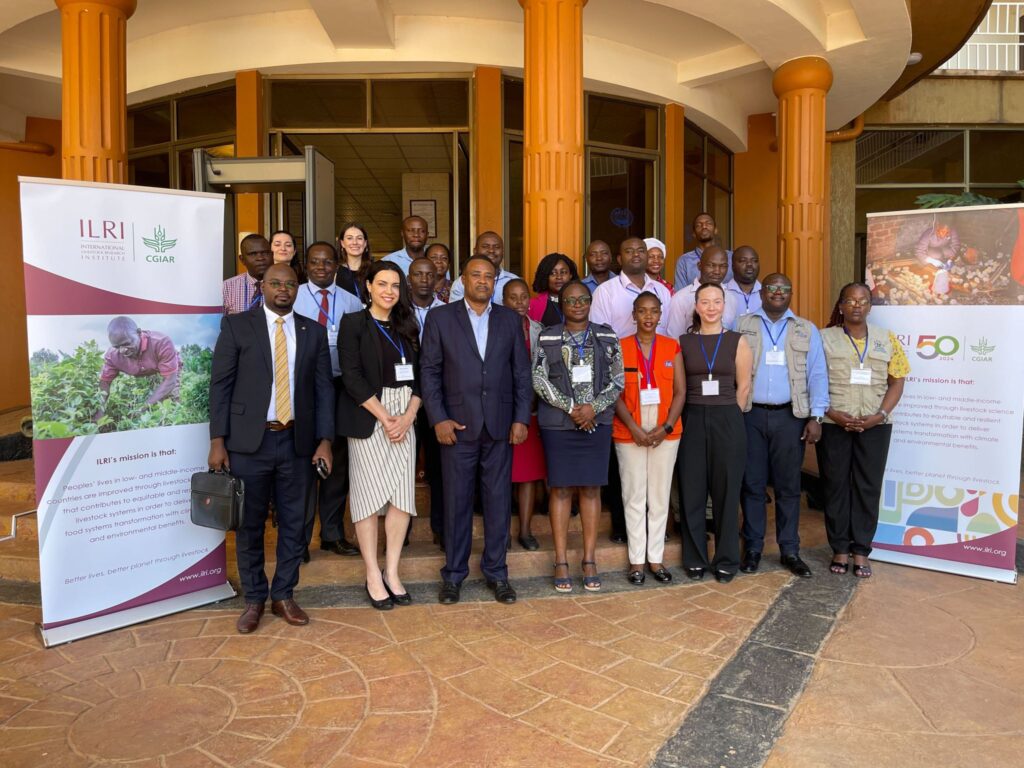

In 2024, Uganda launched its second National Action Plan on Antimicrobial Resistance (NAP-AMR II) (2024/25-2028/29) with the goal of advancing strategic efforts to mitigate and prevent AMR across the country.
The AMR Policy Accelerator partnered with the Government of Uganda to support this process through the Smart Choice Process, an evidence-informed multi-sectoral approach to turn policy into action. Together, they strategically prioritized future AMR interventions and produced a policy brief outlining key recommendations to guide the implementation of NAP-AMR II and ensure its lasting impact.
These efforts contributed to the identification of priority/high ranking NAP-AMR II interventions with implementation considerations against seven indicators − cost, impact, equity, timeline, alignment, root drivers, and transformative potential.
Core Team Uganda

Dr. Charles Olaro,
Director General, Health Services, Ministry of Health

Dr. Henry Kajumbula,
Chair, Uganda National AMR Steering Committee

Musa Sekamatte,
National One Health Platform

Rogers Kisame,
Program Manager, Fleming Fund, Baylor College of Medicine Children’s Foundation-Uganda
Uganda’s National Action Plan on Antimicrobial Resistance (NAP-AMR II) (2024/25-2028/29): Priorities for Action
Co-produced by the Ministry of Health, Ministry of Agriculture, Animal Industry and Fisheries, Ministry of Water and Environment, the Uganda National One Health Platform and the AMR Policy Accelerator, this policy brief outlines the progress achieved under Uganda’s first NAP, highlights the strategic priorities emerging in NAP-AMR II, and offers recommendations to support strategic implementation for sustained impact on AMR.
Key Takeaways

Urgent action to combat AMR: AMR endangers Uganda’s healthcare system, stalls economic growth, and worsens social inequalities by driving up medical costs, reducing productivity, and disproportionately impacting vulnerable communities.

Importance of multi-sectoral coordination: Combating AMR in Uganda necessitates collective responsibility and a unified, whole-of-society approach, engaging multiple ministries and government agencies beyond the health sector at all levels.

Advancing equity in AMR containment: NAP-AMR II drives inclusive access to lifesaving antimicrobials and embeds gender- responsive interventions to protect vulnerable populations, ensuring no one is left behind in the fight against AMR.

Need for strengthened public awareness: Enhancing national public awareness campaigns aimed at educating the public about the dangers of antimicrobial misuse will help foster healthier behaviours and reduce unnecessary antibiotic use.
Smart Choice Process in Uganda
Using the Smart Choice Process, the Government of Uganda brought together key One Health experts from across the human, animal, and environmental health to identify and prioritize interventions for the next phase of AMR action.
While leading the development of Uganda NAP-AMR II, the Government of Uganda collaborated with the AMR Policy Accelerator’s Smart Choice Process (SCP) to facilitate the identification, ranking and prioritization of AMR interventions for the next phase of NAP.
Over a 5-week period, the Government of Uganda engaged representatives from the One Health, human, animal, and environmental health sectors as SCP participants to ensure a transparent and multi-sectoral approach. SCP participants worked together through a multi-phased prioritization process designed to build consensus on the most impactful interventions across One Health sectors. These processes culminated in a two-day facilitated workshop where stakeholders from Uganda reviewed, discussed and finalized the priority interventions.
Contributors to Uganda’s NAP-AMR II Smart Choice Process
Intervention prioritization to guide the implementation of Uganda’s NAP-AMR II was undertaken in collaboration with key national One Health stakeholders and technical institutions, including:
Cross Cutting Institutions
- National One Health Platform
- Baylor College of Medicine Foundation Uganda
- Coalition for Health Promotion and Social Development (HEPS- Uganda)
- Makerere University, Walter Reed Program
- Makerere University, School of Public Health
- Makerere University, College of Health Sciences
- Busitema University
- Infectious Disease Institute
- World Health Organization
- United States Agency for International Development (USAID) – Social and Behavior Change Activity (SBCA)
- Food and Agriculture Organization (FAO)
- International Livestock Research Institute (ILRI)
- US Centers for Disease Control and Prevention (CDC)
- i-Train and Evaluate Center (ITEC)
Environment
- Ministry of Water and Environment
- National Environment Management Authority (NEMA)
Animal Health
- Ministry of Agriculture, Animal Industry and Fisheries (MAAIF)
- Uganda Wildlife Authority
- National Animal Disease Diagnostics and Epidemiology Centre (NADDEC)
- The College of Veterinary Medicine, Animal Resources and Biosecurity – Makerere University
Human Health
- Ministry of Health
- Ministry of Health (Department National Health Laboratories and Diagnostic Services)
- National Drug Authority
- National Medical Stores
- Lira Regional Referral Hospital
Smart Choice Process Team
People block – please see right sidebar for options.